Replacing the electric motor: what specifications must match?
When replacing a electric motor Check the power, speed, power supply, construction and dimensions. The protection, control and any additional features must also match the machine. The type plate of the existing motor is the starting point for this, but does not always tell the whole story. Therefore, a motor with the same number of kilowatts is not automatically a suitable replacement. Below you can read which data you compare and what you should pay attention to.
Start with the typeplate of your electric motor
kW
Motor power in kilowatts. Indicates the amount of mechanical power the electric motor delivers to the motor shaft at nominal load. This power must match the load of the machine. A power that is too low can lead to overload and failure.
V
Nominal voltage in volts. Indicates the power supply voltage for which the electric motor is suitable. Check that it corresponds to the available mains voltage and the circuit selected. Incorrect voltage can damage the motor.
A
Nominal current in amps. Indicates how much power the motor consumes under the stated nominal operating conditions. This value is important for setting the motor protection and selecting an appropriate frequency controller.
Hz
rpm or min⁻¹
D/Y
Triangle and star rotation. Indicates how the motor windings can be connected electrically. The combination with the indicated voltage determines which circuit is suitable. Incorrect connection can lead to overload or damage to the motor.
1~ / 3~
Single-phase or three-phase motor. Indicates the type of electrical power the motor requires. Single-phase motors are usually connected to 230 V, while three-phase motors are often used on a 400 V network. Always check the indicated motor voltage and available connection.
IE
Power efficiency class of the motor. Indicates how efficiently the electric motor converts electrical energy into mechanical power. Classes such as IE2, IE3 and IE4 help in comparing the efficiency. A higher class usually means less energy loss under comparable operating conditions.
IP
Degree of protection of the motor housing. Indicates how well the electric motor is protected against dust and water. An IP55 motor, for example, is dust-protected and resistant to water jets. The required protection level depends on the environment in which the motor is used.
IM
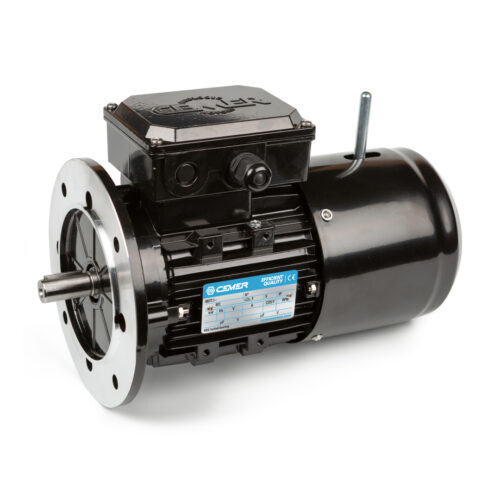
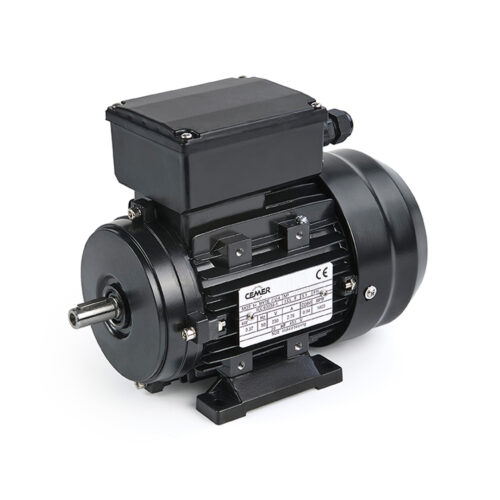
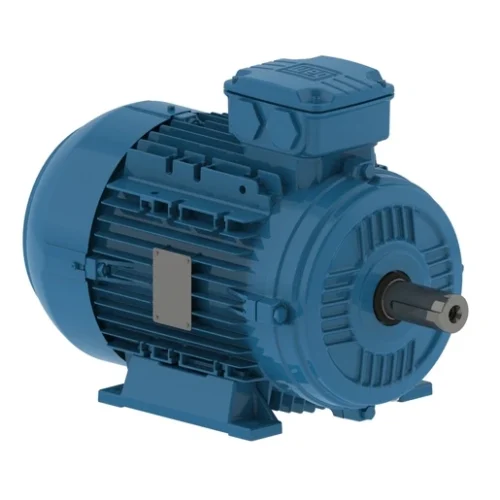
Assembly form of the electric motor. Indicates how the motor can be mounted, for example with feet (IM B3) or a flange (IM B5). When replacing a motor, the mounting method must match the existing installation.
S1, S2 or S3
Type of business of the electric motor. Indicates the usage pattern for which the motor is designed. S1 stands for continuous operation, S2 for short-term operation, and S3 for periodic interrupted operation. The correct operating mode prevents the motor from overheating.
Ins. incl. insulation class
Thermal class of the insulation system. Indicates the maximum temperature at which the insulation of the motor windings is resistant. For insulation class F, this is, for example, 155 °C. The insulation class is important for the thermal loadability and lifespan of the motor.
Are there multiple lines with values on the diagram? Then always read the data that corresponds to the same voltage and frequency. For example, do not combine the power at 50 Hz with the speed at 60 Hz.
This explanation focuses primarily on common industrial asynchronous motors. For special motors, such as servo motors or motors with multiple speeds, additional data is required.
Which electrical data should you compare?
The new motor must be suitable for the available power supply and the load of the machine. Therefore, compare the electrical specifications as a whole. Simply looking at the power or voltage is insufficient.
Power in kW
The required power is determined by what the machine requires from the motor. If the existing engine has been operating well for years and the application remains the same, then the same nominal power is usually a logical starting point.
The number of kilowatts on the diagram indicates the mechanical output power. A 2.2 kW electric motor Therefore, under the given conditions, it can deliver 2.2 kW to the axle. The electrical power absorbed is higher due to losses in the motor.
Do not choose a heavier motor without evaluation if the old one is frequently overloaded. A stuck machine, incorrect transmission or poor cooling can be the actual cause.
Installation by Jumatra
Have the installation carried out by Jumatra. We will contact you after ordering to schedule the installation. The final price will be calculated afterwards based on a daily calculation per part.
Rotation speed and number of poles
The speed of the replacement must match the speed the machine requires. A much higher or lower speed changes the operation of, for example, a pump, fan or conveyor belt.
With an asynchronous motor, the nominal speed is slightly lower than the synchronous speed. A four-pole motor can therefore have 1,450 rpm on the diagram, while the synchronous speed at 50 Hz is 1,500 rpm. There may be slight differences between motors; assess whether the application allows for them.
| Number of poles | Synchronous rotational speed at 50 Hz |
|---|---|
| 2 | 3,000 rpm |
| 4 | 1,500 rpm |
| 6 | 1,000 rpm |
| 8 | 750 rpm |
Tension and star-triangle notation
Number of phases and frequency
Nominal current
Which dimensions and mounting specifications need to be met?
Mounting form: foot, flange or a combination
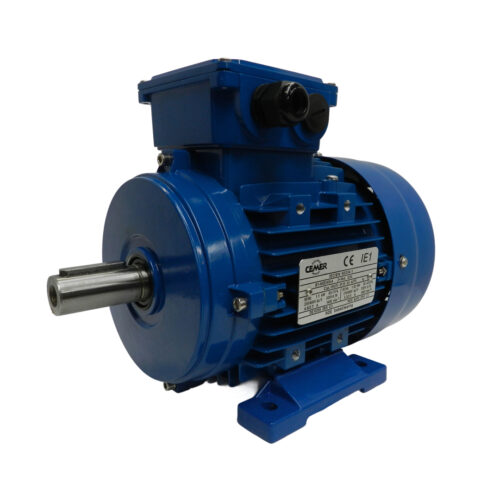
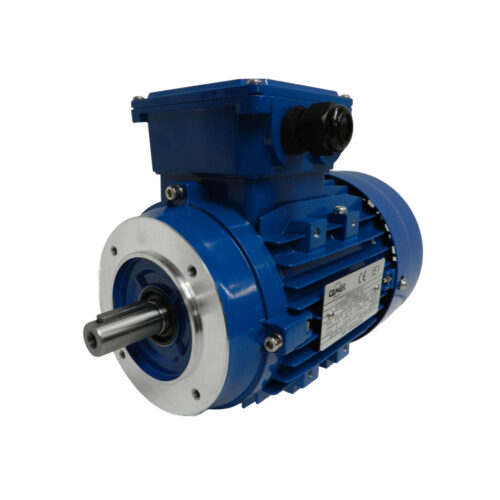
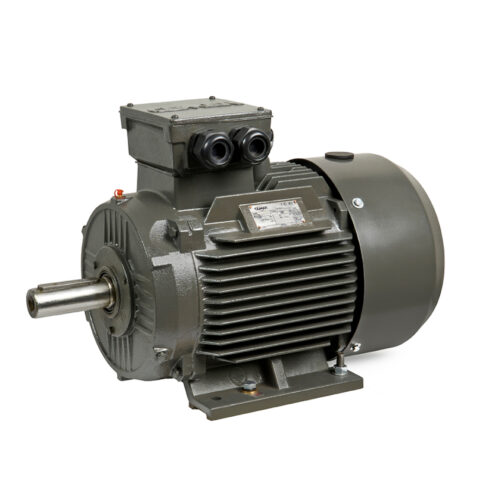
The mounting form describes how the engine is mounted. Common variants are:
| Mounting | Assembly |
|---|---|
| B3 | Foot mounting |
| B5 | Flange mounting with continuous mounting holes |
| B14 | Flange mounting with threaded holes |
| B35 | Foot mounting combined with B5 flange |
| B34 | Foot mounting combined with B14 flange |
Also check the permitted mounting position. A motor that is mounted vertically may require additional requirements such as bearings or protection against ingress of water.
Mounting and height of the base
The construction dimension provides information about standardized connection sizes. In a conventional IEC-foot motor, the number refers to the axis height: the distance between the mounting surface of the feet and the center of the axis. Take the full specification into account, including any letters. Then compare the dimensioning. Only having the same number on the type plate is not a complete check of all the mounting dimensions.
Adsiameter, length measurement and mounting dimensions
Installation space and position of the clamp cabinet
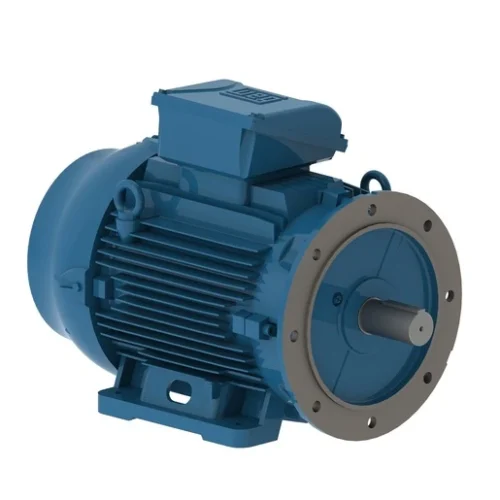
Check that the motor fits within the available installation space, with sufficient free space for cooling and cable connections. Electromotors with the same connection dimensions can differ in total length and size. Also pay attention to the position of the terminal box: it can be mounted on top or on a side and must remain easily accessible. When referring to ‘left’ and ‘right,’ follow the manufacturer’s instructions regarding the viewing direction.
What version of the application do you need?
Degree of protection and insulation class
The IP protection rating must be suitable for the presence of dust and water. The insulation class serves a different purpose: it describes the thermal load-bearing capacity of the insulation system of the windings. Evaluate both separately. A higher insulation class does not automatically make an engine suitable for a wet environment, for example.
Business duration and start behavior
The motor must be suitable for the machine's operating cycle. S1 indicates continuous operation, while other designations refer to, for example, short-term or intermittent use. Also take into account the number of starts and the load during start-up. A motor that needs to start a heavily loaded drive requires different start requirements than a motor that starts virtually without load.
Brakes, sensors and special versions
Additional features of the existing motor must be included if the machine is dependent on them. Examples include a brake, temperature sensors, encoder, or a separate cooling fan. brake motor Among other things, the braking torque and the supply voltage of the brakes are relevant. Does the engine have an ATEX marking? Then determine which certified version is required for the application. Only the same IP class or the same power rating are insufficient for this.
Use with a frequency controller
A replacement engine must be suitable for the frequency drive and the desired speed range. After replacement, also check the engine data entered and the regulator’s identification procedure. When running at a low speed for a long time, cooling needs extra attention. A fan on the motor shaft will also run slower. Depending on the load, a separate fan or customized operating mode may be necessary.
Frequency drive setup service
Have your frequency controller set up by the specialists at Jumatra. This way you can install the controller directly on your system.
Can you switch to a higher yield class?
A higher efficiency class can be a good choice for replacement, provided the engine fits technically into the installation. The efficiency therefore does not have to remain equal to that of the old engine. The IE class indicates the efficiency level. At a similar operating point, a more efficient engine converts a greater proportion of the electrical energy absorbed into mechanical power. How much you save depends, among other things, on load and operating hours. When switching, check the dimensions, nominal current, and start data again. A higher efficiency does not automatically mean that the engine is interchangeable without further inspection.
What if the typeplate is missing or illegible?
Without a legible typeplate, additional information is needed to determine a replacement. Only the appearance or the external dimensions do not provide sufficient certainty regarding the electrical characteristics. Collect as much of the following as possible:
- Photos of the complete electric motor, assembly and driven machine.
- Make, type number and documentation of the machine.
- Asmat sizes, mounting sizes and any flange sizes.
- Data on the feeding and existing control system.
- Information about the application, tax and duration of the business.
- Old invoices, manuals or technical drawings.
Checklist before ordering a replacement electric motor
Control point and what you need to record:
Power and speed
Nutrition and connection
Construction form and mounting position
Building member, as and flange
Built-in space
Is there enough space for the motor, connections and cooling?
Protection and type of business
Additional facilities
Performance class
Security and control
Help with replacing your electric motor
At Jumatra we help you select an electric motor that fits your machine and application. Send a clear photo of the typeplate and include information about what the motor is used for. Preferably also include photos of the installation and information about the control system. This way we can focus on power, speed, connection, dimensions and the required configuration. Contact Jumatra for advice on an appropriate replacement electric motor.
We will help you further.
Our team of specialists is at your disposal with expert advice, technical support and quick assistance in case of breakdowns. 24 hours a day, 7 days a week, help when you need it.